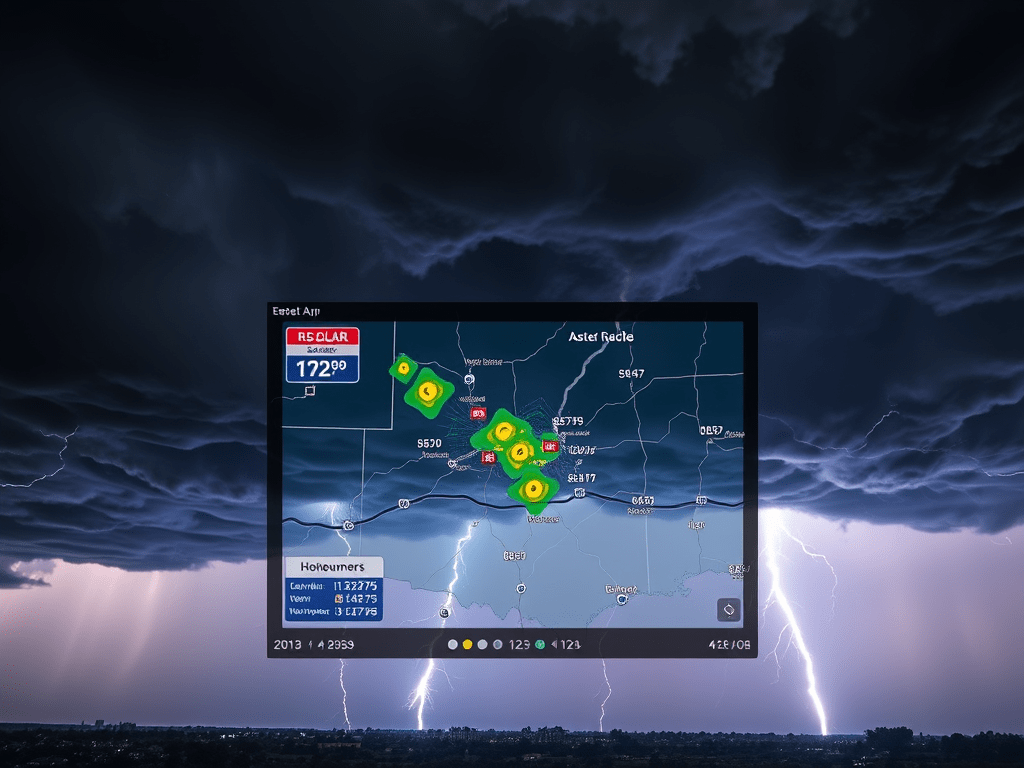
LIve weather radar oklahoma city
Oklahoma City homeowners experience some of the most severe weather in the country. Hail, high winds, and fast-moving storms can cause roof damage that isn’t always obvious from the ground. That’s why having a live weather radar is important.
This page provides live weather radar, radar-derived hail estimates, and official National Weather Service alerts to help homeowners, real estate professionals, and property managers understand recent and active storm activity in the Oklahoma City metro area.
These tools are designed for planning and awareness, not as a guarantee of damage.
Live weather Radar, Estimated Hail Swaths & Official Alerts
What you’ll see on this page:
- Live Weather Radar
Track active storms in real time and see how weather systems move through your neighborhood. - Estimated Hail Swaths (Radar-Derived)
These maps use radar algorithms to estimate where hail likely occurred and the potential maximum size. This approach is more complete than relying only on human-reported hail points. - National Weather Service Watches & Warnings
View official alerts issued for tornadoes, severe thunderstorms, and other hazardous weather events.
Important: No live weather Radar can confirm roof damage. These tools show where storms likely impacted, not what condition a specific roof is in.
Storm Tools (OKC Metro)
Radar shows what’s happening now. Hail swaths are radar-derived estimates (MESH). Watches/warnings are official NWS alerts.
How Accurate Are These live weather radars?
Storm data accuracy varies by source. Here’s how to interpret what you’re seeing:
- Radar-derived hail estimates are generally more reliable than individual storm reports because they analyze full storm paths rather than isolated points.
- Human storm reports can be incomplete, delayed, or clustered in populated areas.
- Official NWS alerts are the most reliable source for determining whether an area was under a severe weather warning.
Having a live weather radar is just a small tool. Even with advanced data, roof damage still depends on many factors, including:
- Roof age and material
- Ventilation and decking condition
- Installation quality
- Hail density, wind direction, and duration
A professional inspection is the only way to confirm damage.
What To Do After a Severe Storm or if you see one coming on the live weather radar
If your area recently experienced hail or high winds:
- Document the storm date and any alerts issued for your location
- Take photos of visible exterior damage (gutters, vents, siding)
- Avoid climbing on the roof if conditions are unsafe
- Schedule a professional roof inspection
- Understand repair costs before filing or responding to an insurance claim
Having a Live weather Radar helps with staying informed early helps prevent missed damage and claim issues later.
Helpful Roofing Tools for Oklahoma City Homeowners
If you’re planning next steps, these free tools may help:
- Roof Replacement Cost Calculator – Estimate a realistic replacement cost range
- Roof Pitch Finder – Determine roof pitch and slope factor
- Aerial Roof Area Estimator – Measure roof size from an aerial image
This live weather Radar are designed for education and planning and do not require personal information.
For Realtors, Media & Property Professionals

This page and its tools are frequently used by:
- Real estate agents explaining inspection results
- Property managers assessing storm exposure
- Journalists covering severe weather impacts
- Homeowners preparing for insurance discussions
Media outlets and professionals are welcome to reference or embed these tools as a free public resource. If you need the HTML please reach out to kenneth@ironhorseroofs.com
Frequently Asked Questions About Hail & Roof Damage
Q: Does hail always damage a roof?
A: No. Some hailstorms cause visible damage, while others only cause minor granule loss or no damage at all. Damage depends on hail size, wind speed, roof age, material type, and installation quality.
Q: How accurate are live weather radar-based hail maps?
A: Radar-derived hail maps estimate where hail likely occurred based on storm intensity and structure. They are more complete than individual storm reports but cannot confirm damage on a specific property.
Q: Can insurance deny a claim even if hail was reported nearby?
A: Yes. Insurance companies base decisions on physical damage found during inspection, not just storm reports or maps. Documentation and professional inspections matter.
Q: How soon should I inspect my roof after a hailstorm?
A: Ideally within a few weeks of the storm. Some damage becomes harder to identify over time due to weathering and granule loss.
Q: Is a professional inspection really necessary?
A: Yes. Roof damage is not always visible from the ground. A trained inspector can identify functional damage, soft spots, and compromised materials.
Weather data is provided for informational purposes only. Radar-derived hail estimates and alert maps do not guarantee property damage. Always consult a licensed roofing professional for a physical inspection and repair recommendations.